The three primary types of excavation are topsoil excavation, earth excavation, and rock excavation. Each is classified by the material being removed from the ground. The type your project requires determines the equipment, timeline, safety requirements, and cost — making it one of the first things any GTA contractor needs to assess before breaking ground.
At Wallace Excavation & Demolition, we've delivered hundreds of excavation, demolition, and shoring projects across Toronto and the GTA for over 10 years. Here's what every builder and property owner needs to understand before starting.
Topsoil excavation is always the first phase of any construction project. It involves removing the uppermost layer of earth — typically between 150 mm and 300 mm deep — before any structural or foundation work begins.
This surface layer is rich in organic matter: decomposing plant material, fungi, bacteria, and nutrients. That organic content makes topsoil valuable for gardening but completely unsuitable for construction. Organic soil is compressible and unstable — it cannot bear the structural loads that foundations, footings, and slabs require.
- Organic soil compresses under load, causing uneven settlement and structural failure
- Removing it exposes stable subsoil for proper geotechnical assessment
- Eliminates potential contaminants before deeper excavation begins
- Creates a clean, level base for the next phase of work
Experienced contractors stockpile excavated topsoil on-site rather than hauling it away. Once the build is complete, it's reused for grading, landscaping, or lawn restoration — saving disposal costs.
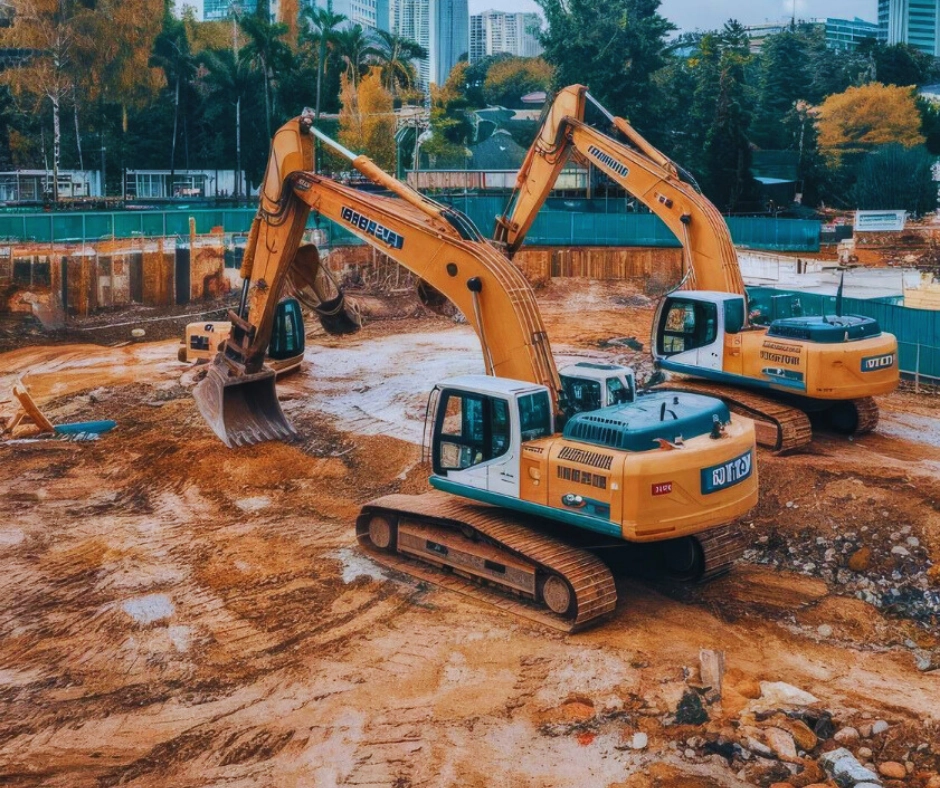
Backhoes and excavators handle most residential topsoil removal efficiently. On larger commercial sites, scrapers clear wide areas quickly. This is generally the least complex of the three excavation types.
Once topsoil is cleared, work begins on the layer below — what contractors call "earth" or subsoil. This is a denser, more compact material composed of mineral particles: clay, sand, silt, or loam, depending on the site's geology.
Earth excavation is the workhorse of GTA construction. It's used to dig building foundations, create trenches for underground utilities, build drainage systems, establish roadway grades, and prepare sites for commercial development.
Soil composition varies significantly across the Greater Toronto Area. Clay-heavy soils — common throughout much of Toronto — retain water, expand when wet, and require careful management. High water tables in certain areas may also require dewatering systems to keep the site safe and workable.
Excavated earth is frequently stockpiled and reused on the same site for backfilling around foundations, building embankments, or final grading — reducing material disposal costs.
- Residential and commercial foundation digging
- Trench excavation for water, sewer, gas, and electrical lines
- Road and driveway subgrade preparation
- Drainage channels and stormwater infrastructure
- Site grading and levelling for new developments
Rock excavation is the most demanding — and typically most costly — of the three primary types. When solid bedrock or large rock formations lie beneath the topsoil and subsoil layers, standard digging machinery isn't sufficient. Specialized equipment and methods are required.
Depending on rock size, depth, and hardness, contractors deploy hydraulic rock breakers, pneumatic jackhammers, rock drills, or — on large-scale projects — controlled blasting.
The Canadian Shield underlies significant portions of Southern Ontario. While most GTA projects don't encounter bedrock at typical foundation depths, it does appear — particularly during deep foundation work, certain basement excavations, or on previously undeveloped sites.
Encountering rock mid-project without prior assessment is one of the most common causes of cost overruns in Toronto construction. A geotechnical investigation before breaking ground eliminates this risk entirely.
- Deep foundation excavation for commercial and multi-storey buildings
- Utility trench work on historically undeveloped land
- Tunnel and underground infrastructure construction
- Sites near the Niagara Escarpment or areas with shallow bedrock
| Type | Material | Depth | Primary Use | Complexity |
|---|---|---|---|---|
| Topsoil | Organic upper layer | 150–300 mm | Site clearing & prep | Low |
| Earth | Subsoil — clay, sand, loam | Varies | Foundations, trenches | Medium |
| Rock | Bedrock / solid rock | Varies | Deep foundations | High |
Most GTA construction projects involve all three excavation types in sequence. A typical residential build starts with topsoil removal, moves into earth excavation for the foundation and utility trenches, and may encounter rock depending on site depth and location.
A geotechnical investigation maps soil layers, water table depth, and rock presence at your build depth. This data drives every decision: equipment, crew, schedule, and budget. Skipping it is where projects get into serious trouble.
Excavation in Toronto and the GTA typically requires municipal permits — especially near utilities, in regulated zones, or when significantly altering grade. A licensed contractor handles all of this as part of standard project preparation.
A contractor equipped for all three excavation types — with deep experience in GTA soil and rock conditions — makes your project more predictable, safer, and more cost-efficient. Wallace Excavation & Demolition handles topsoil, earth, and rock excavation as part of our full site preparation service, alongside demolition and shoring.
Excavation, demolition, and shoring services across:
"Knowing what type of excavation a site requires before breaking ground is the difference between a project that stays on budget and one that doesn't."
Answers to the most common questions we receive from builders, developers, and homeowners across Toronto and the GTA.
Wallace Excavation & Demolition is fully licensed and insured, serving builders and developers across Toronto and the GTA for over 10 years. Send us your project details for a detailed quote.