

Demolition Checklist · Toronto & GTA
Essential Checklist: Utility Disconnections You Must Complete Before Demolition Begins
Who to call for utility disconnections before demolition, what each one involves and how long it takes, so no service is still live when the machine arrives.
In this guide
Quick answer: which utilities must be disconnected before demolition?
Gas, electricity, water, the sewer connection, telephone and cable lines, and any stored fuel or chemicals. In Ontario, utility disconnections before demolition are mandatory: services that may endanger people must be shut off and disconnected before work starts and stay that way until it ends. Natural gas takes the longest: Enbridge Gas asks for 6 to 8 weeks from payment, so start there.
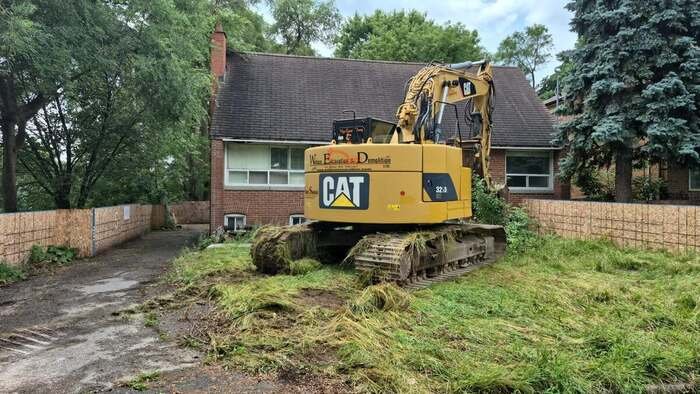
Wallace Excavation & Demolition cannot bring a machine onto a house that still has a live service. This checklist is the order we recommend for Toronto and GTA homeowners, builders and property managers. For the cost side of the same job, see our guide to hidden demolition costs and our explanation of how demolition cost is calculated.
A note on accuracy. Utility procedures, lead times and City fees change from time to time. This article is general information, not legal advice. Confirm the current requirements with each provider and with Toronto Building before you book.
What the Law Requires for Utility Disconnections Before Demolition
- During demolition: under Ontario’s Construction Projects regulation (O. Reg. 213/91, s. 214), all gas, electrical and other services that may endanger people must be shut off and disconnected before the demolition, and must remain that way during it. All toxic, flammable or explosive substances must be removed from the building first.
- Before excavation: hazardous services in and near an excavation must be located, marked and, if they pose a hazard, shut off and disconnected before digging starts (s. 228). That matters when the foundation comes out.
- The permit and the utilities depend on each other: Toronto Hydro states that it may need the City of Toronto demolition permit before it disconnects, and City staff have noted that some providers want the permit before they disconnect at the main. Start the permit and the utility requests together.
The 6-Step Utility Disconnection Checklist, in the Order to Start Them
The order below follows lead time, longest first. Tick each item as you complete it.
Natural gas: start here, it takes the longest
Who to contact: Enbridge Gas, 1-877-362-7434
Enbridge Gas states that it needs 6 to 8 weeks from the time payment is received to the date the disconnection is completed. That makes gas the longest lead time on this list, so the request goes in as soon as the demolition is decided, not when the permit arrives. Ask for the service to be cut off at the main, so no live service line is left running to the lot.
Electricity: Toronto Hydro permanent disconnection
Who to contact: Toronto Hydro, permanent service disconnection online form
Toronto Hydro handles this through an online request. You choose a disconnection date, review the job quotation, and pay in full before the appointment can be confirmed. Depending on the project, Toronto Hydro may also require the City of Toronto demolition permit before it proceeds. On the scheduled day, its crews permanently disconnect the power and remove the service.
Outside Toronto, the local electricity distributor for your address handles the request, so confirm who that is before you start.
Water: Toronto Water turn-off and disconnection
Who to contact: Toronto Water, through the City of Toronto (311 is the starting point)
The City’s fee schedule lists a water turn-off fee for demolition of $110.13, and states that disconnecting the old water service is not included in it. Disconnection of a residential water service up to 25 mm carries its own fee of $1,739.74. These fees took effect on January 1, 2026 and are reviewed every year, so ask Toronto Water which one your project needs.
Sanitary and storm sewer connections
Who to contact: Toronto Water, through the City of Toronto
The City lists a fee of $1,816.50 to disconnect a residential sanitary sewer service connection in the road allowance. Whether your project needs it, and how the storm connection is handled, depends on the property, so confirm both with Toronto Water instead of assuming.
Telephone, cable, internet and alarm lines
Who to contact: each provider that serves the address
Each provider has its own request process, and overhead drops should be removed by the provider, not cut by the demolition crew. Contact every company that serves the address, including alarm monitoring, and ask for the physical line to be removed, not only the account closed.
Fuel oil, propane and other stored hazards
Who to contact: qualified handlers for each substance
Ontario’s construction regulation requires all toxic, flammable or explosive substances to be removed from a building before it is demolished. That covers heating oil, propane cylinders, paints, solvents and chemicals. A tank in the basement is the easy case. A buried oil tank is the costly one, and our guide to hidden demolition costs explains how to spot one.
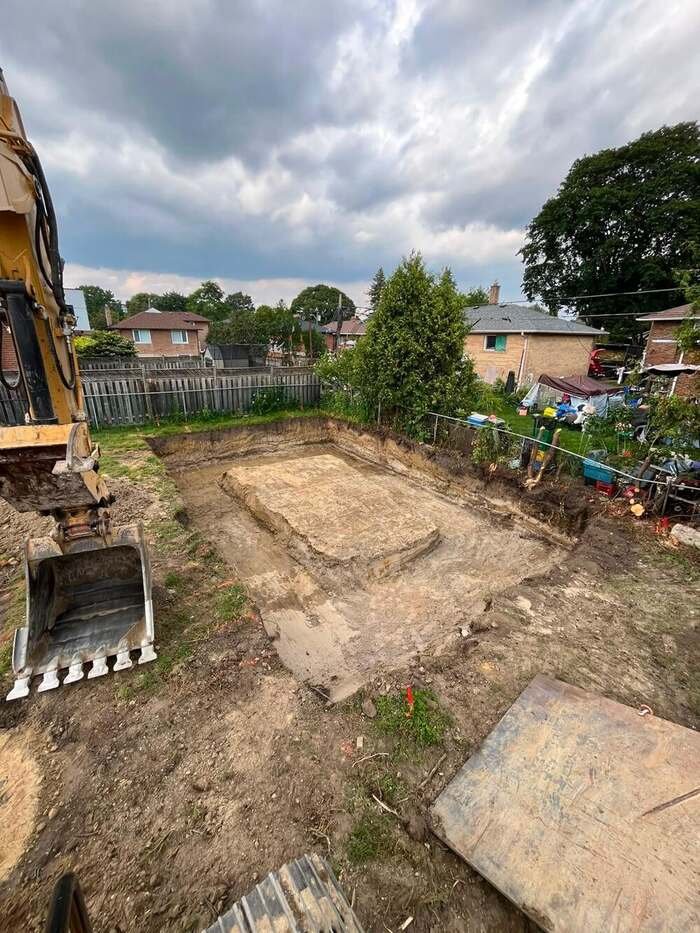
The site after the house came down, with the old slab exposed, executed by Wallace Excavation & Demolition.
Confirm Each Disconnection Before the Machine Arrives
- Get it in writing. Ask each provider for written confirmation of the date and of what was disconnected, and keep the copies with your demolition paperwork.
- Share it with your contractor. The crew should hold the confirmations before the first day on site, because a service that is still live is a stop-work problem, not a paperwork one.
- Request locates before the foundation comes out. Ontario One Call notifies the owners of buried lines. It does not disconnect anything, so it complements the checklist and does not replace it.
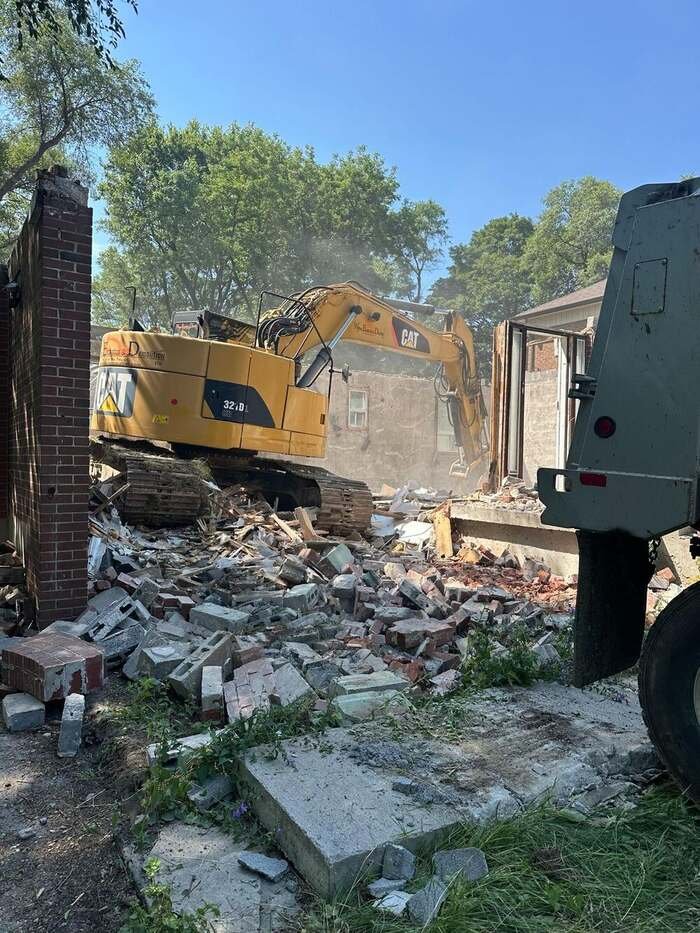
Common Questions About Utility Disconnections Before Demolition
Do I need the demolition permit before the utilities will disconnect?
It depends on the provider, and that is why the two should move in parallel. Toronto Hydro states that it may need the City of Toronto demolition permit before it proceeds, and City staff have noted that some utility providers require a demolition permit to disconnect a service at the main. Apply for the permit and submit the utility requests at the same time, starting with gas because it has the longest lead time.
Who has to request utility disconnections before demolition, the owner or the contractor?
Utilities usually deal with the property owner or the account holder, although many will accept a contractor acting with the owner’s authorization. Check each provider’s rule, and give your contractor written authorization where it is needed so the requests are not held up.
Are the disconnection fees part of my demolition quote?
Usually they are not, because they are charged by the utilities, not by the contractor. Ask whether your quote includes them or whether you pay each utility directly.
What happens to my utility accounts after the disconnections?
Ask each provider for a final reading and close or transfer the account once the service is removed. For a Toronto utility account, the City lists a special or final read fee of $22.09 as of January 1, 2026.
What if my house shares a wall or services with a neighbour?
Tell the utilities and your contractor early. A service that also feeds a neighbouring home cannot simply be cut, so the utility may need to reconfigure or protect it first, and the work around a shared wall is planned differently from a detached teardown.
Utility Disconnections Before Demolition Across Toronto and the GTA
Wallace Excavation & Demolition is based in Etobicoke and provides demolition for residential and commercial clients in the cities below. The Ontario rules are the same everywhere, but the providers are not. Outside Toronto, water and sewer disconnections go through the local municipality or the regional public works department, and the electricity distributor can differ. In Halton Region, which includes Burlington and Milton, regional public works schedules water and sanitary disconnections, for example.
- Toronto
- Etobicoke
- North York
- East York
- Mississauga
- Brampton
- Vaughan
- Markham
- Richmond Hill
- Burlington
- Milton
Why Hire Wallace Excavation & Demolition
Disconnections are the part of a demolition that happens before any machine moves, and the part most likely to delay it. Here is how Wallace Excavation & Demolition handles it.
The schedule starts with the slowest utility
We plan the demolition date around the longest lead time, so the crew is not waiting on a utility.
The scope names what is in and what is out
Your written estimate states who requests and pays for each disconnection, so there are no surprises.
One team from demolition to excavation
Demolition, excavation and shoring are connected, and one contractor responsible for the sequence keeps the schedule in step.
Plan Your Demolition With the Utility Disconnections Built In
Send us the address and the date you are aiming for. You will get a written scope that names the disconnections, the permits and the schedule, with no obligation.
Get a Free Quote from Wallace Excavation & Demolition